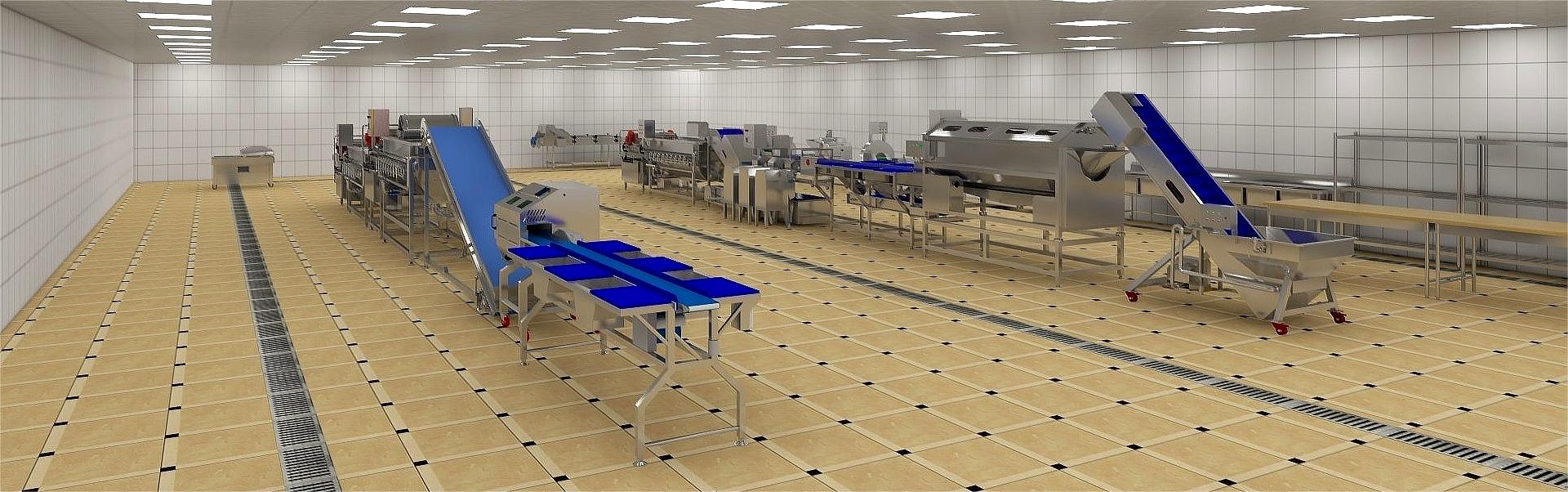
A Dough Mixer is an essential piece of Commercial Kitchen Equipment designed to mix flour, water, and other ingredients into high-quality dough. It is widely used in bakeries, restaurants, hotels, central kitchens, and food processing factories for producing bread, pizza, noodles, steamed buns, pastries, and other bakery products.
Compared with manual kneading, a professional dough mixer machine can improve production efficiency, reduce labor costs, and maintain consistent dough quality. For businesses that produce bread and bakery products, choosing the right bread dough mixer is important for improving product texture and production capacity.
How Does a Dough Mixer Work?
The working principle of a dough mixer is based on mechanical mixing and kneading. The motor transfers power to the mixing shaft, driving the dough hook or mixing blade to rotate continuously.
During operation, the dough is repeatedly:
Pressed
Folded
Stretched
Kneaded
This process allows flour and water to combine evenly and helps develop gluten structure. A well-developed gluten network gives dough better elasticity, toughness, and extensibility, which directly affects the final food quality.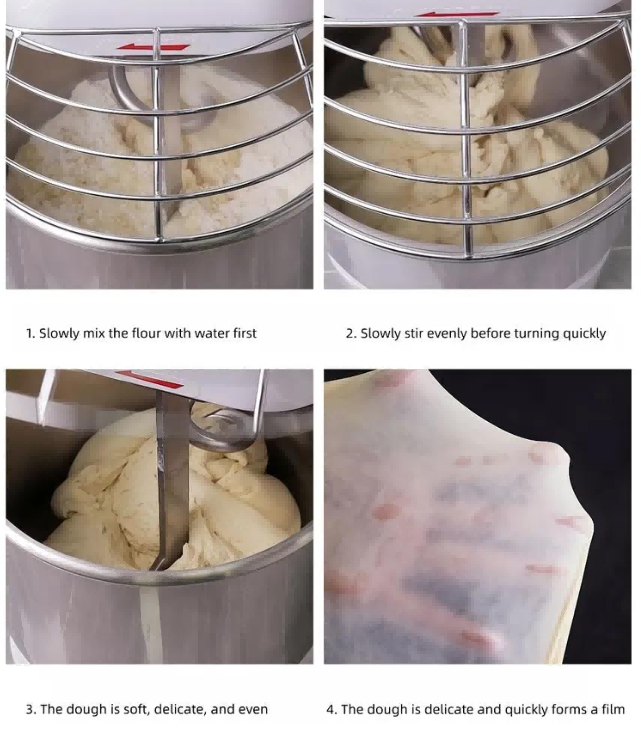
Why Use a Commercial Dough Mixer?
A commercial dough mixer provides better efficiency and consistency compared with traditional manual dough preparation.
Higher production efficiency: Large-capacity machines can process more dough in less time.
Stable dough quality: Controlled speed and mixing time ensure consistent results.
Lower labor costs: Automatic mixing reduces manual operation.
Better gluten development: Powerful kneading improves dough elasticity.
Main Types of Dough Mixers
According to structure and application, commercial dough mixers are mainly divided into two types:Horizontal Dough Mixer and Double Speed Double Action Dough Mixer.
1. Horizontal Dough Mixer
A horizontal dough mixer is mainly designed for traditional Chinese-style dough products, including steamed buns, dumplings, noodles, and pancakes.
The recommended flour-to-water ratio is usually around 1:0.38-0.45. It is widely used in restaurants, hotels, and food processing businesses.
Mixing Rod Type Dough Mixer
The mixing rod type creates a kneading effect by pressing the dough between the mixing rod and the bowl wall during operation.
It is suitable for:
Steamed buns
Chinese bread
Pancakes
Soft dough products
Mixing Blade Type Dough Mixer
The mixing blade type is designed for harder dough with lower water content. It provides fast forming speed and makes dough easier to remove and clean.
It is commonly used for noodles and other hard dough products.
Ring Type Dough Mixer
The ring-type dough mixer provides strong and uniform mixing performance. It is suitable for different Chinese dough products, including mixed grain dough.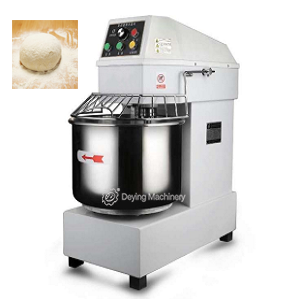
2. Double Speed Double Action Dough Mixer
A double speed double action dough mixer uses two different speeds and two independent driving systems to achieve efficient mixing and gluten development.
It is mainly used in bakeries and pastry shops for producing:
Bread dough
Pizza dough
Cakes
Mooncakes
Western-style pastries
How Does a Double Speed Dough Mixer Work?
The mixing process usually includes two stages:
Low-speed mixing: Mix flour and water evenly to form the initial dough.
High-speed kneading: Increase speed to develop gluten and improve dough elasticity.
Normally, low-speed mixing takes about 4 minutes and high-speed kneading takes about 8 minutes. The complete process can usually be finished within approximately 12 minutes.
Dough Mixer vs Stand Mixer: What Is the Difference?
Many customers search for terms such as stand mixer with dough hook and best stand mixer for bread dough. Although both machines use dough hooks, commercial dough mixers are designed for higher production requirements.
| Feature | Dough Mixer | Stand Mixer |
|---|---|---|
| Application | Commercial food production | Small-scale or home use |
| Capacity | Large batch production | Limited capacity |
| Motor Power | Heavy-duty kneading | Light mixing applications |
| Main Users | Restaurants, bakeries, factories | Home users |
How to Choose the Best Dough Mixer for Your Business?
Selecting the right dough mixer depends on product type, dough hardness, production capacity, and power requirements.
1. Consider Your Product Type
Bread and pizza: Double Speed Double Action Dough Mixer
Noodles and steamed buns: Horizontal Dough Mixer
Large factories: Industrial Dough Mixer
2. Consider Dough Water Ratio
1:0.38-0.45 water ratio: Horizontal Dough Mixer
1:0.5 or higher: Bakery Dough Mixer
3. Consider Production Capacity
The machine capacity should match your daily production volume. Overloading or underloading may affect mixing performance and equipment lifespan.
4. Check Power Requirements
Before purchasing, confirm whether the machine requires single-phase or three-phase power according to capacity and factory conditions.
How Long Does It Take to Knead Dough in a Mixer?
The kneading time depends on dough formula, ingredients, and machine performance.
Low-speed mixing: About 4 minutes
High-speed kneading: About 8 minutes
Total process: Around 12 minutes
Applications of Dough Mixer Machine
Commercial dough mixers are widely used in:
Bakeries
Hotels
Restaurants
Pizza shops
Central kitchens
Food processing factories
Conclusion
A dough mixer is an important machine for modern food production. With powerful motors, efficient mixing structures, and precise control systems, it helps businesses produce consistent and high-quality dough.
Whether you need a horizontal dough mixer for traditional foods or a double speed dough mixer for bakery production, choosing the right dough mixer machine can improve efficiency, reduce labor costs, and support business growth.