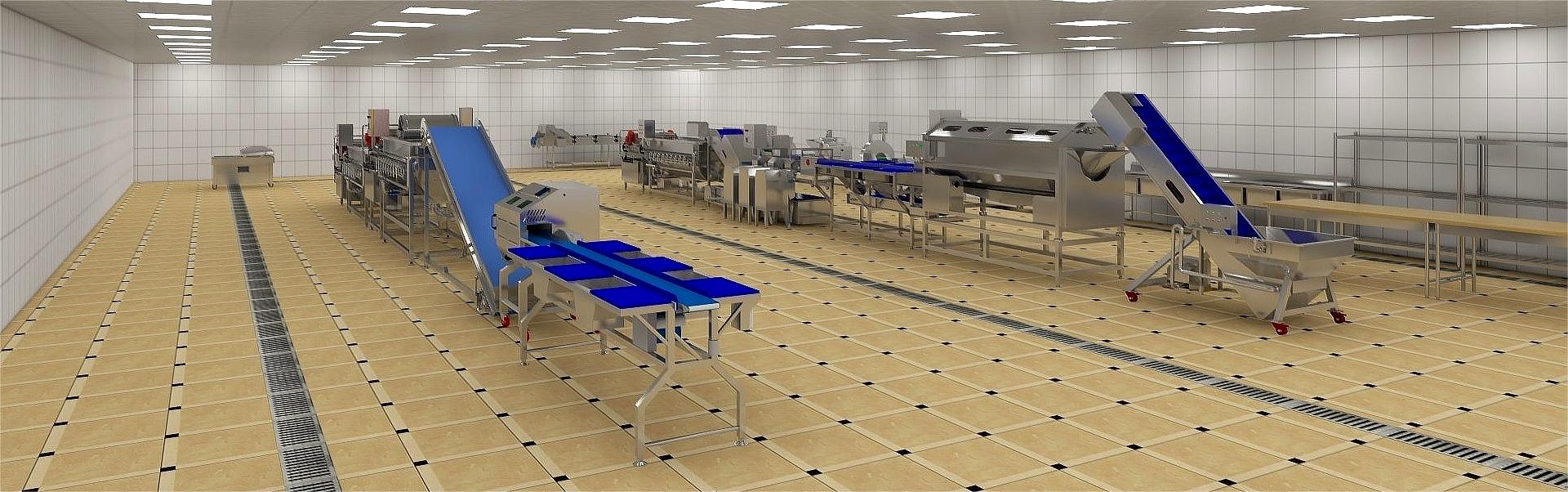
Designing an efficient vegetable processing line requires more than selecting individual machines. The complete line should match the type of vegetables, production capacity, processing requirements, available space, and final product specifications. A well-designed vegetable processing line can connect washing, peeling, cutting, dewatering, sorting, conveying, and packaging into a coordinated workflow.
How to Design an Efficient Vegetable Processing Line?
An efficient vegetable processing line should be designed around the actual production process. Before selecting equipment, manufacturers and food processors should define the raw materials, required output, processing steps, hygiene requirements, and level of automation.
1. Define the Vegetables to Be Processed
Different vegetables require different processing methods. Leafy vegetables, root vegetables, fruits, and firm vegetables may require different washing, peeling, cutting, and drying equipment.
For example, leafy vegetables may require gentle washing and dewatering, while potatoes and carrots may require peeling before cutting. Therefore, identifying the main vegetable types is the first step in designing the processing line.
2. Determine the Required Production Capacity
Production capacity directly affects the selection and quantity of equipment. A small food processing facility may require a compact line, while a large commercial processor may need continuous processing equipment with higher throughput.
When determining capacity, consider not only the target output per hour but also peak production requirements, raw material availability, processing losses, and future production expansion.
It is also important to make sure that the capacity of each machine is reasonably matched. If one machine processes vegetables much more slowly than the others, it can become a bottleneck in the entire line.
3. Plan the Complete Processing Workflow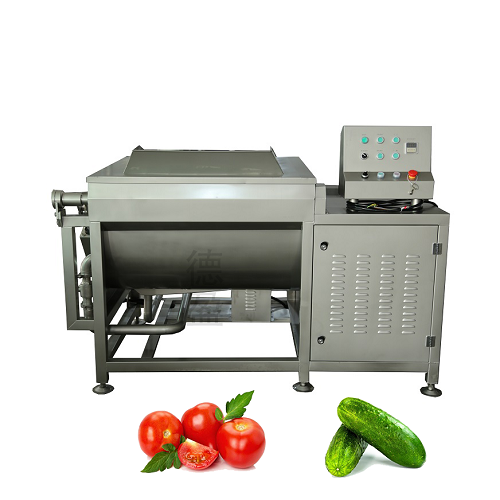
A typical vegetable processing line may include several stages:
Raw vegetable receiving
Sorting and inspection
Washing and cleaning
Peeling
Cutting or slicing
Dewatering or drying
Secondary sorting
Conveying
Packaging
Not every vegetable requires all of these processes. The actual workflow should be customized according to the raw material and final product.
4. Select the Right Vegetable Washing Equipment
Washing is one of the most important stages in vegetable processing. The washing method should remove soil, sand, surface contamination, and other unwanted materials without causing unnecessary damage to the vegetables.
Depending on the product and processing requirements, vegetable Processing Lines may use bubble washing machines, spray washing systems, cleaning tanks, or other industrial washing equipment.
For leafy vegetables and delicate products, the washing process should provide sufficient cleaning while maintaining the appearance and structure of the raw material.
5. Add Peeling Equipment When Required
Root vegetables such as potatoes, carrots, and similar products may require peeling before cutting or further processing. The appropriate peeling machine depends on the vegetable type, surface characteristics, required capacity, and desired peeling result.
Integrating peeling equipment into the line can reduce manual labor and create a more consistent production workflow.
6. Choose Cutting Equipment According to the Final Product
Vegetable cutting requirements vary significantly between products. Depending on the final application, vegetables may need to be sliced, diced, shredded, chopped, or cut into specific shapes.
When selecting a vegetable Cutting Machine, consider:
Vegetable type and hardness
Required cutting shape
Cutting thickness or size
Production capacity
Product consistency
Ease of cleaning and maintenance
For processors producing several types of cut vegetables, a multi-functional vegetable cutting machine may provide greater flexibility.
7. Include Dewatering or Drying After Washing
After washing and cutting, excess surface water may need to be removed before further processing or packaging. Excess moisture can affect product handling, packaging efficiency, and storage conditions.
Depending on the production process, a vegetable spin dryer, vibration draining and drying machine, or other dewatering equipment can be integrated into the line.
The drying method should be selected according to the vegetable type and the required moisture level. Excessive mechanical force should also be avoided when processing delicate vegetables.
8. Design an Efficient Conveying System
Conveyors connect different machines and help maintain a continuous material flow. The conveying system should be designed around the layout and processing sequence of the factory.
A suitable conveyor can reduce unnecessary manual handling and help operators move products between washing, cutting, drying, sorting, and packaging stages.
9. Consider Hygiene and Cleaning Requirements
Food processing equipment must be designed with hygiene and routine cleaning in mind. Materials, machine construction, drainage, accessible surfaces, and cleaning procedures should all be considered during line planning.
Stainless steel construction is commonly used for food processing machinery because of its durability and suitability for regular cleaning. The specific material and construction should be selected according to the product and applicable food processing requirements.
10. Plan the Factory Layout
The equipment arrangement should follow the processing sequence as closely as possible. A logical layout can reduce unnecessary movement of raw materials and finished products.
When planning the layout, consider:
Available production space
Machine dimensions
Material flow
Operator access
Cleaning and maintenance space
Electrical and water connections
Future production expansion
A well-planned layout can also make equipment maintenance and daily operation more convenient.
11. Balance Automation With Production Requirements
Automation can reduce manual handling and improve process consistency, but the appropriate automation level depends on production volume, labor availability, product requirements, and budget.
For some factories, semi-automatic equipment may be sufficient. Larger processing facilities may benefit from continuous conveying, automatic feeding, integrated washing, cutting, drying, and packaging systems.
12. Work With a Manufacturer for Line Integration
When several machines are connected into one vegetable processing line, compatibility between individual machines becomes important. Equipment dimensions, capacity, feeding height, discharge height, conveyor speed, and control systems should be considered together.
Working with an experienced food processing machinery manufacturer can help buyers develop a processing flow based on their actual products and production requirements instead of purchasing unrelated machines individually.
Designing an efficient vegetable processing line starts with the raw material and final product rather than the equipment itself. Vegetable type, production capacity, processing workflow, washing, cutting, dewatering, conveying, hygiene, factory layout, and automation level should all be considered as part of the same system.
Deying Food Machinery provides Vegetable Processing Equipment and customized food processing solutions for different production requirements. From washing and cutting to dewatering, conveying, and other processing stages, the equipment can be configured according to the customer's products, capacity, and factory layout.
Planning a vegetable processing line? Contact Deying Food Machinery with your vegetable type, required capacity, processing requirements, and factory information to discuss a suitable processing solution.