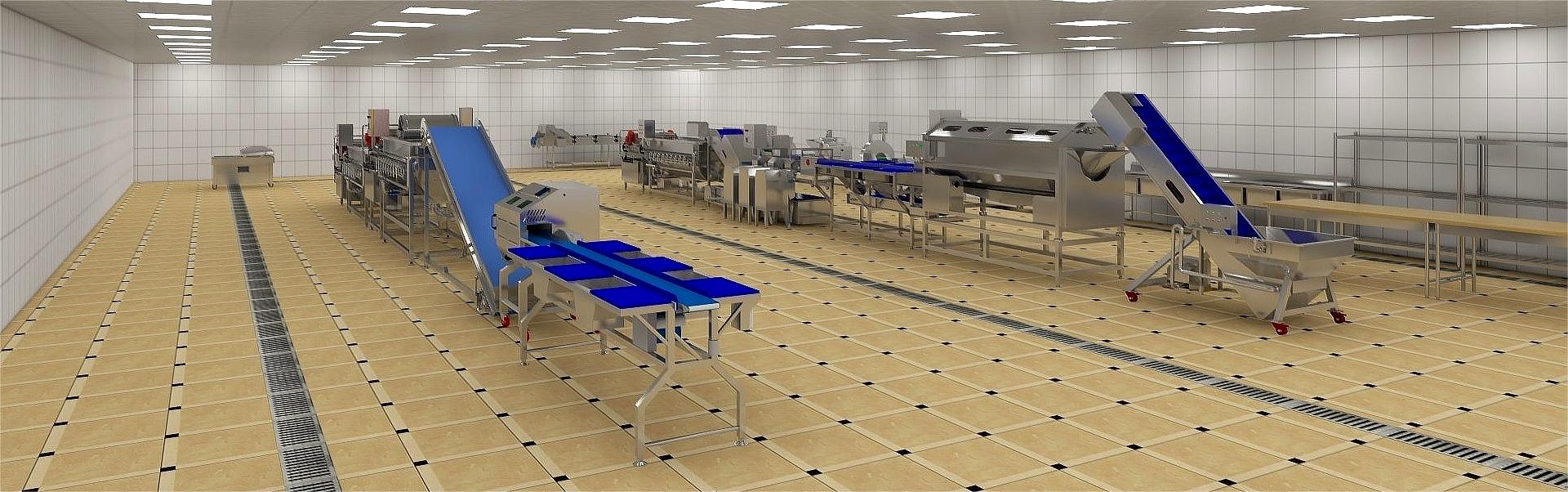
A vegetable processing line combines different types of food processing equipment to turn fresh vegetables into cleaned, peeled, cut, dried, sorted, and packaged products. The exact equipment configuration depends on the vegetable type, processing method, production capacity, and final product requirements.
What Equipment Is Needed for a Vegetable Processing Line?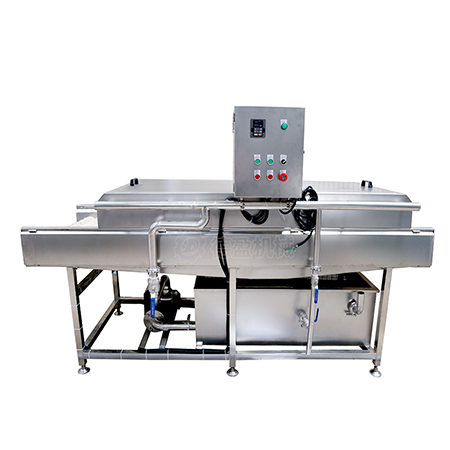
A complete vegetable processing line may include sorting equipment, washing machines, peeling machines, cutting machines, dewatering equipment, conveyors, and packaging machines. Some production lines may use only part of this equipment, while large processing facilities can integrate multiple stages into an automated workflow.
1. Vegetable Sorting Equipment
Sorting is commonly used at the beginning of the processing process to remove unsuitable raw materials, foreign materials, or vegetables that do not meet production requirements.
Depending on the application, sorting can be performed manually or with dedicated sorting equipment. Early sorting helps prevent unsuitable materials from entering downstream processing machines.
2. Vegetable Washing Machine
Vegetable washing equipment removes soil, sand, surface contaminants, and other unwanted materials from fresh vegetables.
Different washing methods can be selected according to the product. For example, bubble washing can provide continuous agitation for certain vegetables, while spray washing and cleaning tanks may be suitable for other processing requirements.
When selecting a vegetable washing machine, consider the vegetable type, washing capacity, water usage, cleaning requirements, and integration with upstream and downstream equipment.
3. Vegetable Peeling Machine
Peeling equipment is required when the final product needs the outer skin removed. Potatoes, carrots, and other root vegetables are common examples.
Industrial peeling machines can reduce manual peeling work and provide a more continuous processing workflow. The machine should be selected according to the vegetable type, required peeling capacity, and acceptable peeling loss.
4. Vegetable Cutting Machine
Cutting is one of the most common processes in commercial vegetable processing. Depending on the final product, vegetables may be sliced, diced, shredded, chopped, or cut into other shapes.
Important selection factors include:
Vegetable type
Cutting shape
Cutting size or thickness
Production capacity
Cutting consistency
Cleaning and maintenance requirements
A multi-functional vegetable cutter can be useful for processors handling different vegetable products or requiring several cutting formats.
5. Vegetable Slicing and Dicing Equipment
Some processing lines require dedicated slicing or dicing equipment to achieve consistent product dimensions.
Uniform cutting is particularly important for food processors producing standardized products for restaurants, catering companies, central kitchens, supermarkets, and packaged food manufacturers.
The appropriate machine should be selected according to the raw material and the required final dimensions.
6. Vegetable Dewatering and Drying Equipment
After washing, vegetables often carry excess surface water. Dewatering equipment removes this moisture before the product moves to packaging or other downstream processes.
Common equipment may include:
Vegetable spin dryers
Vegetable dehydration machines
Vibration draining and drying machines
Continuous Centrifuge equipment
The appropriate equipment depends on the vegetable structure, processing capacity, and required moisture condition.
7. Vegetable Conveyors
Conveying equipment connects different processing stages and provides continuous product movement between machines.
A conveyor can be installed between washing, cutting, drying, sorting, and packaging equipment. Its size, speed, height, and material-contact construction should be coordinated with the rest of the processing line.
A well-designed conveying system can also reduce manual handling and improve the overall material flow of the production line.
8. Inspection and Sorting Equipment
Depending on the product and quality requirements, additional inspection or sorting may be placed after washing, cutting, or drying.
This stage can help identify unsuitable pieces, foreign materials, damaged products, or products outside the required specifications before they reach packaging.
9. Vegetable Packaging Machine
Packaging is the final stage for many fresh-cut and processed vegetable production lines. The appropriate packaging equipment depends on the product, packaging material, package size, and production volume.
For some applications, vacuum packaging or other automated packaging systems can be integrated with the upstream processing equipment. Packaging equipment should be selected together with the required product condition and distribution method.
10. Control and Supporting Systems
A complete vegetable processing line may also require electrical control systems, water supply and drainage, pumps, stainless steel worktables, material handling equipment, and other supporting components.
For automated production lines, the control system should coordinate the operation of individual machines and conveyors. This helps operators manage the production process more efficiently.
Typical Vegetable Processing Line Workflow
A typical processing workflow can be arranged as:
Raw Vegetable Receiving → Sorting → Washing → Peeling → Cutting → Dewatering → Inspection → Conveying → Packaging
However, this is only a general example. Some vegetables do not require peeling, while others may require additional processes such as special washing, grading, blanching, or customized cutting.
How to Choose Equipment for a Vegetable Processing Line?
When selecting equipment, buyers should consider the entire production process rather than choosing each machine independently.
Vegetable type: Different vegetables have different processing characteristics.
Production capacity: Machine capacity should match the required hourly output.
Final product: Cutting size, moisture level, appearance, and packaging requirements affect equipment selection.
Factory space: Machine dimensions and processing flow should fit the available layout.
Automation level: Determine how much manual handling is acceptable.
Cleaning: Consider food-contact materials and daily cleaning procedures.
Future expansion: Leave enough flexibility for additional equipment or increased production.
Why Choose a Complete Vegetable Processing Solution?
Purchasing equipment as part of a coordinated processing solution can simplify equipment matching and line integration. The capacity, feeding height, discharge position, conveyor arrangement, and processing sequence can be considered together.
For food factories and central kitchens, this approach can also make it easier to adapt the production line to different vegetables and processing requirements.
The equipment needed for a vegetable processing line depends on the raw material and final product. A typical line may include sorting, washing, peeling, cutting, dewatering, conveying, inspection, and packaging equipment, but the actual configuration should be customized to the production process.
Deying Food Machinery provides a range of vegetable processing machines and food processing line solutions. Buyers can combine individual machines or develop a more complete processing line according to vegetable type, production capacity, processing requirements, and factory layout.
Looking for Vegetable Processing Equipment? Contact Deying Food Machinery with your product type and production requirements to discuss suitable machines or a complete vegetable processing line.