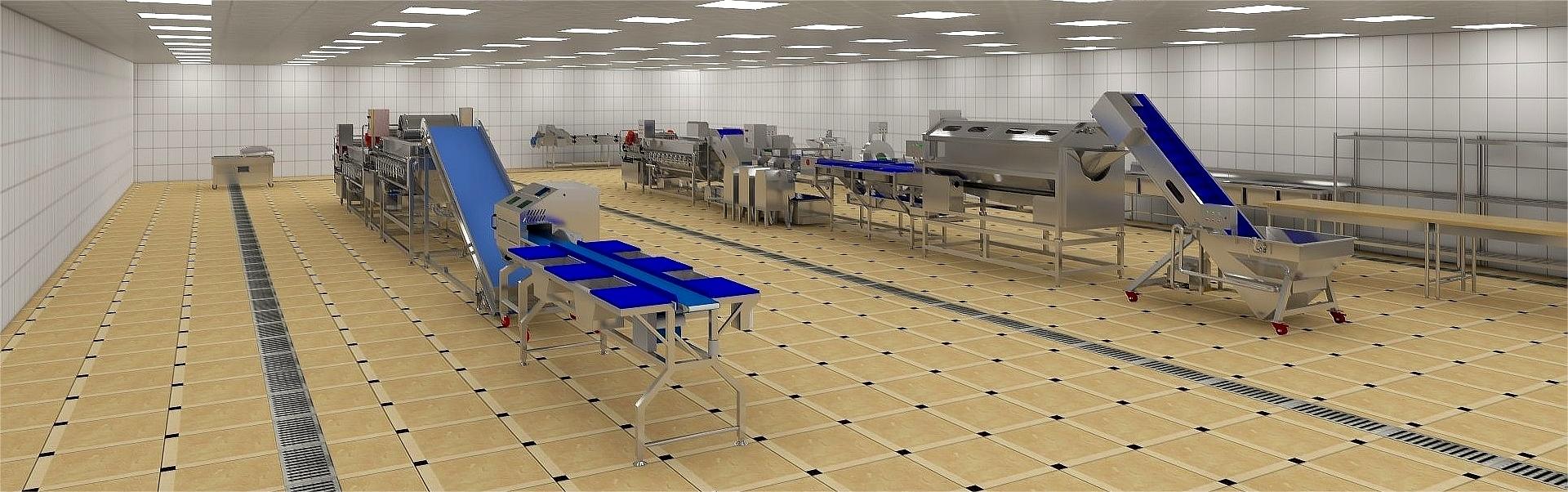
An industrial Potato Processing Line transforms fresh potatoes into finished food products through a series of coordinated mechanical and thermal processing stages. Depending on the product, the production process may include washing, peeling, trimming, cutting, blanching, dewatering, frying, freezing, seasoning, and packaging.
Each stage requires suitable potato processing equipment to maintain product quality, improve production efficiency, and ensure consistent processing results. For example, French fries require cutting and blanching before frying or freezing, while potato chips need precise slicing and controlled frying conditions.
Understanding how an industrial Potato Processing Line works helps food manufacturers evaluate equipment configurations, plan production workflows, and select suitable machinery for their factories.
1. Raw Potato Receiving and Inspection
The first stage of potato processing begins with receiving raw potatoes from farms or suppliers. Before entering the production line, potatoes are inspected to identify unsuitable raw materials, including rotten, damaged, or heavily contaminated potatoes.
Raw material quality has a direct influence on the final product. Potato variety, size, shape, dry matter content, and reducing sugar levels can affect processing performance, color, texture, and finished product quality.
Equipment Used
Raw potato receiving hopper
Feeding conveyor
Inspection conveyor
Raw material storage and transfer systems
Consistent raw material inspection helps reduce processing problems in subsequent stages and supports stable production.
2. Potato Washing
After inspection, raw potatoes enter the washing stage. The purpose of washing is to remove soil, sand, stones, and other surface impurities before peeling or cutting.
Industrial potato washing machines may use rotating brushes, rollers, water spraying, or tumbling systems to clean potatoes. Some production lines also incorporate pre-cleaning and separation equipment to remove larger foreign materials.
How Does a Potato Washing Machine Work?
Raw potatoes are transferred into the washing machine through a feeding conveyor.
Water and mechanical movement loosen and remove dirt from the potato surfaces.
Brushes, rollers, or rotating components help clean hard-to-reach areas.
Washed potatoes are discharged and transferred to the next processing stage.
Effective washing improves raw material cleanliness and helps protect downstream equipment from excessive dirt and foreign materials.
3. Potato Peeling and Trimming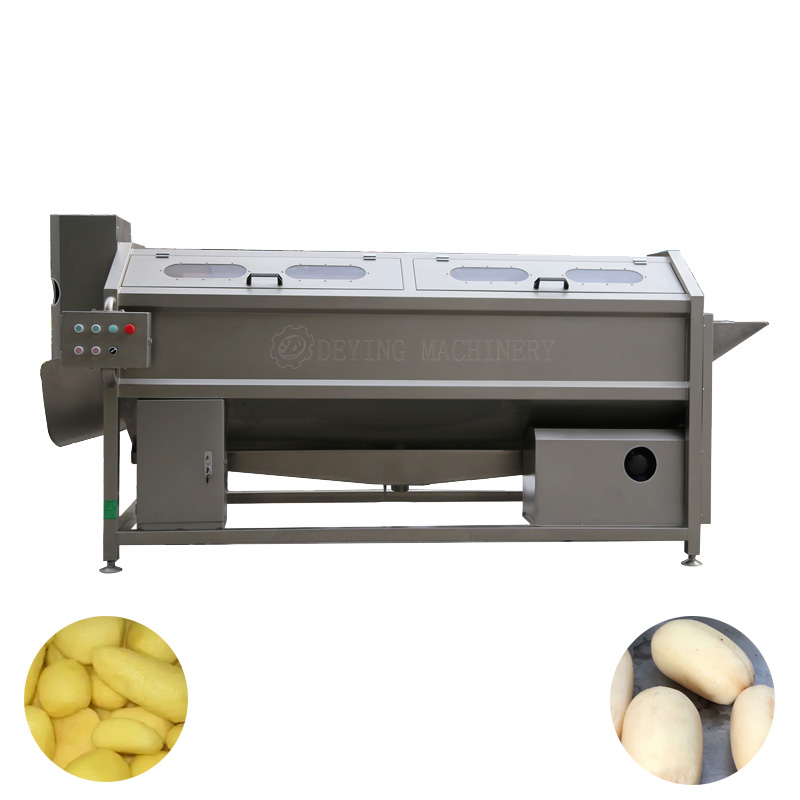
Once washed, potatoes may enter a peeling machine to remove their outer skins. The peeling method depends on production capacity, potato characteristics, and the required finished product quality.
Common industrial peeling methods include abrasive peeling, mechanical peeling, and steam peeling. Abrasive peeling uses friction to remove the skin, while steam peeling uses high-temperature steam followed by pressure release to loosen the outer layer.
After peeling, potatoes may pass through a manual or automated trimming station. Operators or suitable inspection systems remove remaining skin, damaged sections, and unwanted defects.
Important Processing Considerations
Peeling efficiency and product yield
Consistency of skin removal
Potato size and shape variations
Product damage and waste reduction
Cleaning and maintenance requirements
Proper peeling and trimming help improve the appearance of finished potato products while reducing unnecessary raw material loss.
4. Potato Cutting and Shaping
After peeling and trimming, potatoes are transferred to industrial Cutting Machines. This stage determines the shape and dimensions of the final product.
Different cutting systems are available for different potato products. French fries production lines use specialized cutting equipment to produce uniform strips, while potato chips production lines require slicing machines capable of producing thin, consistent slices.
Common Potato Cutting Types
Straight-cut: Commonly used for traditional French fries.
Crinkle-cut: Produces ridged potato strips with a distinctive surface.
Wedge-cut: Creates larger potato pieces for wedges and similar products.
Slice-cut: Produces thin potato slices for potato chips.
Cube-cut: Creates diced potato pieces for prepared food products.
Cutting accuracy is important because product dimensions influence cooking time, moisture removal, texture, and finished product consistency.
5. Rinsing and Blanching
After cutting, potato pieces may undergo rinsing and blanching. Rinsing helps remove loose starch from the cut surfaces, while blanching uses controlled hot water or steam treatment to prepare the products for subsequent processing.
Blanching can help reduce surface sugars, deactivate certain enzymes, and improve color consistency. It may also help achieve the desired texture in finished products.
How Does the Blanching Process Work?
Cut potato pieces are transferred into the blanching machine.
Products are exposed to hot water or steam under controlled conditions.
Processing temperature and time are adjusted according to product specifications.
Blanched potatoes are transferred for cooling, rinsing, or dewatering as required.
Blanching conditions should be determined according to potato variety, cut dimensions, and the intended finished product. Excessive processing can negatively affect product texture and structure.
6. Dewatering and Surface Drying
After washing or blanching, potato products may retain excess surface moisture. Dewatering and drying equipment remove some of this moisture before frying or other subsequent operations.
Common solutions include centrifugal dewatering machines, vibrating drainage conveyors, and air-drying systems. The appropriate method depends on product shape, production capacity, and processing requirements.
For products that will be fried, reducing surface moisture can help stabilize the frying process and limit excessive oil splashing. It does not replace the need for proper frying temperature and time control.
7. Frying or Other Cooking Processes
Cooking is an important stage in the production of potato chips and many French fries products. Industrial frying machines use controlled oil temperature and processing time to achieve the desired color, texture, and moisture content.
Continuous frying systems are commonly used in industrial food factories because they can process products continuously and maintain more consistent operating conditions.
Key Factors in Industrial Potato Frying
Oil temperature: Needs to be controlled according to product dimensions and processing requirements.
Frying time: Influences moisture removal, texture, and final color.
Oil circulation: Helps maintain more uniform temperature throughout the frying system.
Oil filtration: Removes food particles and helps maintain oil quality.
Conveying speed: Determines product movement and residence time inside the fryer.
Not every potato processing line requires a frying stage. For example, some frozen potato products are blanched, dried, and frozen, while other products undergo pre-frying before freezing.
8. Cooling, Freezing, or Seasoning
The next stage depends on the type of finished potato product.
For Frozen French Fries
After blanching and optional pre-frying, French fries are cooled and transferred to a freezing system. Individual quick freezing (IQF) equipment is commonly used to freeze individual potato pieces rapidly and help prevent them from sticking together.
Freezing conditions should be selected according to product size, line capacity, and required product temperature. Frozen products are then transferred to cold storage before distribution.
For Potato Chips
After frying, potato chips are typically cooled before entering the seasoning stage. Seasoning equipment distributes salt, spices, and other flavoring ingredients across the product surface.
Uniform seasoning distribution helps maintain consistent flavor across production batches.
9. Weighing and Packaging
Packaging is the final stage of an industrial potato processing line. Finished products are weighed, portioned, and packed into suitable packaging materials according to product requirements.
Potato chips are commonly packed in sealed snack bags, while frozen French fries may use bags or other packaging formats designed for frozen food storage and distribution.
Common Packaging Equipment
Automatic weighing machines
Multihead weighing systems
Vertical form-fill-seal machines
Horizontal packaging machines
Bag sealing and date coding equipment
Metal detection and inspection systems where required
Suitable packaging helps protect products from moisture, contamination, and physical damage during storage and transportation. Packaging specifications should match the product's storage conditions and distribution requirements.
10. How Do Different Potato Products Require Different Processing Lines?
Although many potato products share the same initial processing stages, their downstream equipment configurations can be significantly different.
| Processing Stage | French Fries | Potato Chips |
|---|---|---|
| Washing | Required | Required |
| Peeling | Common | Common, depending on product type |
| Cutting | Strip cutting | Thin slicing |
| Blanching | Common | Depends on product formulation |
| Dewatering | Common | Common |
| Frying | Optional pre-frying or final frying | Common |
| Freezing | Common for frozen products | Generally not required |
| Seasoning | Optional | Common for flavored chips |
This comparison shows why buyers should define their target products before selecting a potato processing line. A French fries production line and a potato chips production line may share some machines, but their cutting, cooking, and finishing systems are different.
11. How to Improve Potato Processing Line Efficiency
Production efficiency depends on equipment performance, process coordination, raw material quality, and daily operating management. Food manufacturers can consider the following measures to improve overall production performance.
Match Equipment Capacity
Each processing machine should be compatible with the required production capacity of the complete line. Balanced equipment configuration helps prevent bottlenecks between washing, cutting, cooking, and packaging.
Optimize Production Layout
A logical equipment layout reduces unnecessary product transfers and improves material flow. Proper planning should also provide enough space for cleaning, maintenance, and operator access.
Maintain Stable Processing Parameters
Consistent control of cutting dimensions, blanching temperature, frying conditions, and freezing parameters helps reduce product variation and improve finished product quality.
Schedule Regular Equipment Maintenance
Routine inspection and maintenance help identify worn components, prevent unexpected downtime, and maintain equipment performance. Critical spare parts should be available to support continuous production.
Strengthen Quality Control
Monitoring raw material quality and checking products at key processing stages can help identify defects early. Food manufacturers should establish appropriate hygiene procedures and quality control standards throughout the production process.
12. Frequently Asked Questions About Industrial Potato Processing
Q1: What is the first step in an industrial potato processing line?
The first step is usually raw potato receiving and inspection, followed by washing. Raw materials are checked for quality and suitability before entering the main processing stages.
Q2: Why are potatoes blanched before frying?
Blanching can help reduce surface sugars, deactivate certain enzymes, and prepare potato pieces for frying. The process also helps manufacturers achieve more consistent product characteristics when properly controlled.
Q3: Does every potato processing line need a frying machine?
No. The equipment configuration depends on the finished product. Potato chips generally require frying, while some frozen potato products may be blanched, dried, and frozen without a pre-frying stage.
Q4: What determines the production capacity of a potato processing line?
Production capacity depends on the processing capacity of individual machines, raw material characteristics, product dimensions, processing time, and the coordination of the complete production system.