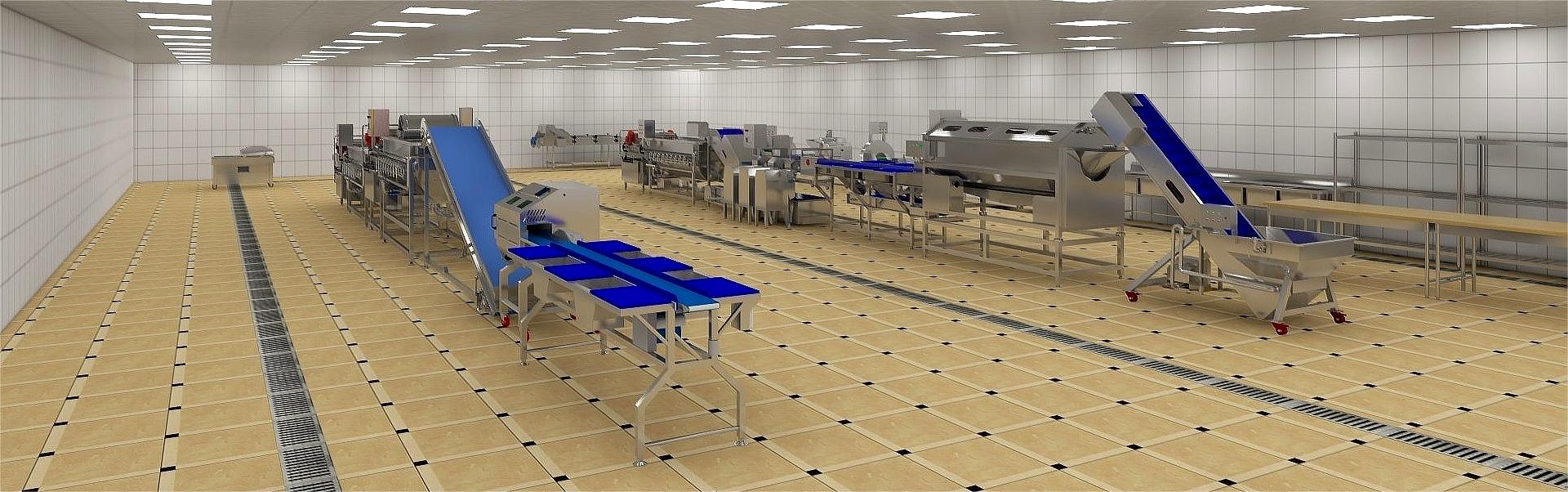
A food Cutting machine is a core piece of equipment in the food processing industry, designed to efficiently and precisely slice, dice, shred, or cube ingredients into uniform shapes. Widely used in commercial kitchens, food factories, catering chains, and retail settings, these machines enhance productivity while ensuring consistency in food preparation.
1. Key Types & Functions
A. By Power Source
Manual Cutting Machines:
Human-powered, suitable for small-scale or home use.
Low cost but limited efficiency.
Electric Cutting Machines:
Motor-driven, ideal for high-volume commercial use.
Dominates the market due to speed and scalability.
Multi-Functional Cutting Machines:
Equipped with interchangeable blades or modules for slicing, dicing, shredding, and grinding.
Offers versatility for diverse food processing needs.
B. By Cutting Method
Mechanical Cutting:
Uses blades or rollers to physically cut hard ingredients (e.g., root vegetables, meats, cheese).
Laser Cutting:
Employs high-energy laser beams for ultra-precise cuts (e.g., chocolate decorations, intricate shapes).
High cost, typically reserved for specialized applications.
C. Core Features
High Efficiency: Processes large quantities rapidly (e.g., 100+ kg/hour).
Uniformity: Ensures consistent sizes for optimal cooking results and product presentation.
Safety Design: Includes guards (e.g., hand-protection shields) to reduce injury risks.
Easy Cleaning: Removable parts or waterproof designs simplify sanitation.
2. Typical Applications
A. Commercial Kitchens
Restaurants/Hotels: Prepares garnishes (e.g., lemon slices) or ingredients (e.g., potato sticks, carrot cubes).
Fast-Food Chains: Standardizes cuts for burgers, fries, or salads to maintain brand consistency.
B. Food Processing Factories
Meat Processing: Slices ham, bacon, or fish fillets; supports frozen/chilled meat handling.
Fruit & Vegetable Processing: Dices tomatoes for salsa, shreds cabbage for coleslaw, or slices apples for pies.
Dairy Processing: Grates cheese or cuts it into sticks.
C. Retail & Supermarkets
Pre-Packaged Foods: Cuts ingredients into uniform sizes for ready-to-use products (e.g., fruit platters).
Deli Counters: Demonstrates live cutting to enhance customer experience.
3. Buying Guide: Key Considerations
A. Processing Capacity
Match power and output to your needs:
Small electric machines: 50–100 kg/day (e.g., cafeterias).
Industrial models: 500+ kg/day (e.g., large-scale factories).
B. Cutting Precision
Prioritize sharp, adjustable blades for <±1mm (error <±1mm) in slice thickness.
C. Material & Durability
Blade Material: Stainless steel (corrosion-resistant) or ceramic (high hardness).
Body Material: Food-grade plastic or stainless steel for hygiene compliance.
D. Safety Features
Check for emergency stop buttons, non-slip bases, and blade guards.
E. Maintenance Costs
Opt for easily replaceable blades and detachable parts to reduce long-term expenses.
4. Leading Brands & Products
A. Global Brands
Urschel
Specializes in high-precision machines for fruits, vegetables, meats, and cheese.
Model Example: Urschel TranSlicer® 2500 (slices as thin as 0.5mm).
Marchant Schmidt
Focuses on industrial-grade equipment for hard cheeses and meats.
Model Example: MS-1000 (processes up to 2 tons/day).
KRONEN
German brand renowned for leafy vegetable processing (e.g., automatic coring).
Model Example: TT450 (designed for lettuce and chicory).
B. Affordable Options (e.g., Chinese Brands)
SENDERPICK
Offers cost-effective electric cutters for small-to-medium businesses.
Model Example: 160KG Electric Meat Cutter (multi-functional slicing/dicing/shredding).