Industrial Crate Washing Machine: Working Process & Technical Parameters Guide
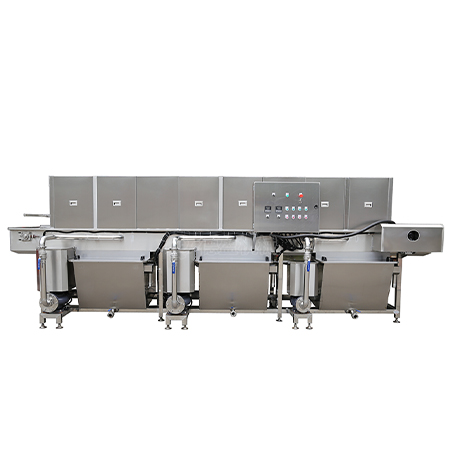
An industrial Crate Washing Machine is a fully automatic cleaning device specially used for washing plastic turnover boxes, baskets, trays and pallets in food processing, cold chain logistics, dairy and pharmaceutical industries. It adopts multi-stage high-pressure spray cleaning, automatic conveying and water circulation filtration system to replace manual cleaning, greatly improving efficiency and ensuring hygiene standards. This article introduces its complete working process and core technical parameters in detail.
Full Working Process of Crate Washing Machine
The automatic crate washing machine runs in a continuous and stable workflow. The whole cleaning process is divided into four clear stages, ensuring thorough cleaning without dead corners.
1. Feeding & Pre-Wash Stage
Dirty crates are manually or automatically placed on the conveyor belt and enter the pre-wash zone. High-pressure water sprays from multiple angles to flush away large food residues, mud and loose dirt. This step protects the subsequent main wash zone and reduces pollution.
2. Main Wash Stage
Crates enter the high-pressure main washing zone with hot water circulation. High-temperature resistant rotating nozzles spray water from up, down, left and right directions to remove oil, sticky residues and stubborn dirt. The water temperature can be adjusted automatically to improve decontamination efficiency.
3. Rinse Stage
After main washing, clean water is used for final rinsing to remove detergent residues and remaining impurities. This ensures the crates meet food-grade hygiene requirements and are ready for disinfection and reuse.
4. Discharging Stage
Cleaned crates are automatically conveyed to the outlet for collection. The whole process is continuous without manual intervention, realizing high-efficiency automatic operation.
Core Technical Parameters & Explanations
Understanding technical parameters helps users choose the right crate washing machine according to production needs. Below are the standard parameters and their practical meanings.
| Overall Dimensions | 6000×1270×1620mm |
| Voltage | 380V 3-phase |
| Power | 9.75kW (without heating) |
| Capacity | 800–2000 pcs/h |
Overall Dimensions: Length × width × height. It helps users judge whether the machine fits the workshop layout and installation space.
Voltage: 380V industrial power supply, suitable for stable long-term operation in factories.
Power: Indicates total power consumption. Lower power means more energy-saving under the same cleaning efficiency.
Capacity: The number of crates cleaned per hour. It directly reflects production efficiency and helps match factory output demands.
Key Structural & Material Features
The whole machine is made of SUS304 food-grade stainless steel, which is corrosion-resistant, high-temperature resistant and easy to clean. The high-pressure spray system uses multi-angle rotating nozzles to ensure no dead ends. The water circulation and filtration system saves water and reduces operating costs. PLC intelligent control allows users to adjust water temperature, pressure and conveyor speed freely.
Applicable Industries
This machine is widely used in food processing plants, slaughterhouses, bakeries, cold chain logistics, central kitchens and pharmaceutical factories. It is especially suitable for places requiring high-frequency container turnover and strict hygiene control.