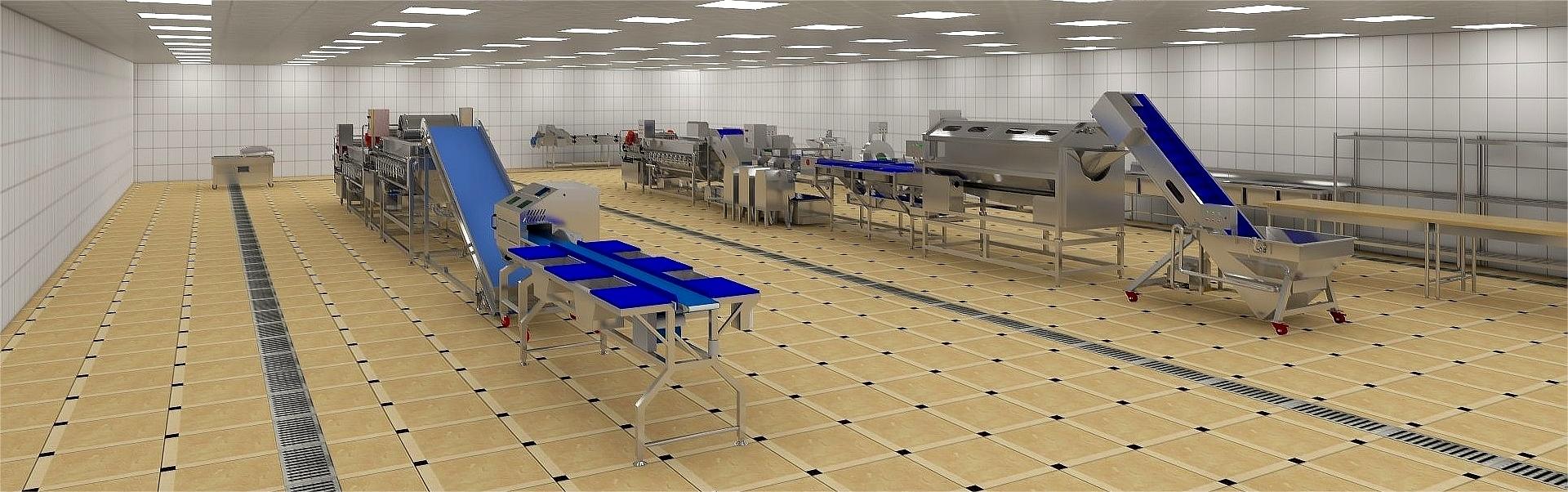
A potato processing line is an integrated system of industrial machines designed to transform raw potatoes into finished food products. Depending on the product requirements, the production process may include washing, peeling, sorting, cutting, blanching, frying, drying, seasoning, and packaging.
Potato Processing Lines are widely used in food factories producing French fries, potato chips, frozen potato products, and other potato-based foods. By combining multiple processing machines, manufacturers can improve production efficiency, maintain consistent product quality, and reduce manual handling.
For food manufacturers, distributors, and investors planning to establish or upgrade a potato processing plant, understanding the equipment configuration and production requirements is essential for selecting the right solution.
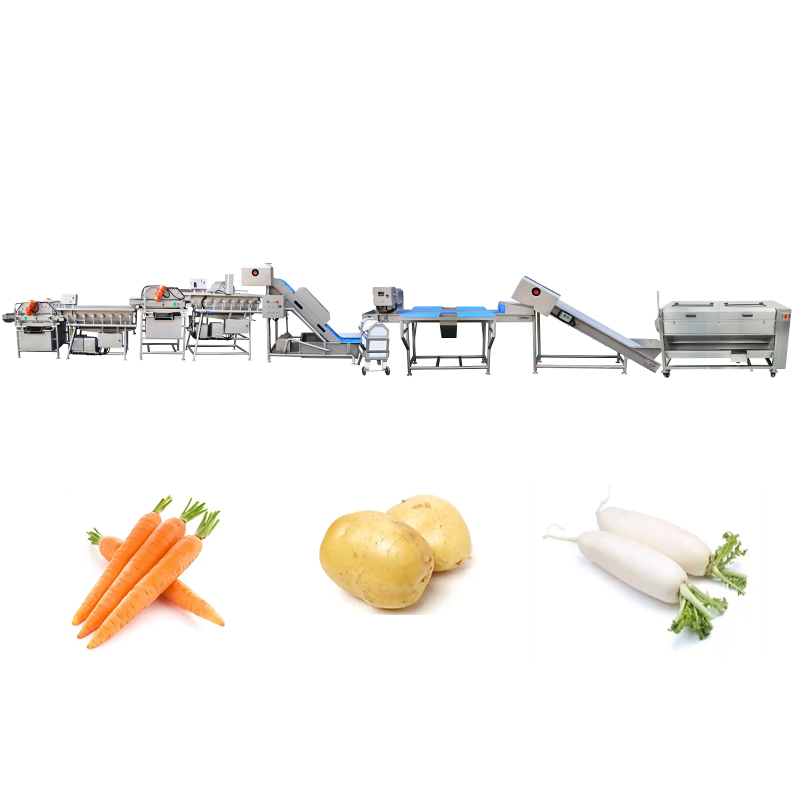
1. Main Types of Potato Processing Lines
Different potato products require different processing methods and equipment configurations. The following are some common industrial potato processing lines.
1.1 French Fries Production Line
A French fries production line processes fresh potatoes into frozen or ready-to-fry French fries. The typical process includes washing, peeling, trimming, cutting, rinsing, blanching, dewatering, frying or pre-frying, freezing, and packaging.
Depending on the final product specifications, manufacturers can configure the line to produce different French fry shapes and sizes, including straight-cut fries, crinkle-cut fries, and other customized cuts.
1.2 Potato Chips Production Line
A potato chips production line is designed to manufacture thin, crispy potato slices. The process generally involves potato washing, peeling, slicing, rinsing, dewatering, frying, seasoning, and packaging.
Production requirements such as slice thickness, frying temperature, oil circulation, and seasoning distribution influence the final texture, color, and taste of potato chips.
1.3 Frozen Potato Products Processing Line
Frozen potato products include frozen French fries, potato wedges, and other prepared potato items. These products typically require blanching, surface drying, pre-frying when specified, and rapid freezing before packaging.
A suitable freezing system helps maintain product quality during storage and distribution. The equipment configuration depends on the product type, freezing capacity, and required storage conditions.
1.4 Small-Scale Potato Processing Line
A small-scale potato processing line is suitable for startups, small food manufacturers, restaurants, and regional food processing businesses. It generally has a lower production capacity and may use semi-automatic equipment to reduce initial investment.
Compared with large industrial systems, small-scale solutions can offer more flexible production arrangements and are often easier to install in facilities with limited space.
2. Main Machines in an Industrial Potato Processing Line
An industrial potato processing line consists of several machines that work together to complete different production stages. The exact configuration varies according to the final product and required production capacity.
2.1 Potato Washing Machine
The potato washing machine removes soil, sand, and other surface impurities from raw potatoes. Depending on the machine design, washing may involve water spraying, rotating brushes, rollers, or tumbling systems.
Effective washing helps reduce contamination entering subsequent processing stages and prepares potatoes for peeling and cutting.
2.2 Potato Peeling Machine
The potato peeling machine removes the outer skin of potatoes using abrasive rollers, brushes, or other mechanical peeling methods. Some production lines may use steam peeling or alternative technologies depending on their processing requirements.
Peeling efficiency, product loss, and potato size are important considerations when selecting peeling equipment.
2.3 Potato Sorting and Grading Machine
Sorting and grading equipment separates potatoes according to size, shape, or other specified characteristics. Consistent raw material dimensions help improve cutting accuracy and maintain uniform finished products.
2.4 Potato Cutting Machine
Industrial potato Cutting Machines transform peeled potatoes into different shapes and sizes. Common configurations include straight-cut French fries, crinkle-cut fries, potato cubes, wedges, and thin slices for potato chips.
Cutting specifications should be matched to the final product requirements, as dimensions can influence cooking time, texture, and appearance.
2.5 Blanching Machine
A blanching machine uses controlled hot water or steam treatment to process cut potato products. Blanching can help reduce surface sugars, deactivate certain enzymes, and prepare products for subsequent drying, frying, or freezing stages.
Temperature and processing time need to be adjusted according to potato variety, cut size, and product specifications.
2.6 Dewatering and Drying Equipment
Dewatering equipment removes excess surface water after washing or blanching. Centrifugal dewatering machines and air-drying systems are commonly used depending on the production line design.
Reducing surface moisture before frying can help improve frying stability and reduce excessive oil splashing.
2.7 Industrial Frying Machine
Industrial frying machines cook potato products using controlled oil temperature and processing time. Continuous frying systems are commonly used in large-scale production because they support consistent processing and higher throughput.
Oil circulation, filtration, temperature control, and cleaning access are important factors when evaluating frying equipment.
2.8 Freezing and Packaging Equipment
For frozen potato products, a suitable freezing system is used to lower product temperature before cold storage and distribution. Packaging machines then portion and seal the finished products according to packaging specifications.
For potato chips and other ready-to-eat products, seasoning and packaging systems may be integrated after frying and cooling.
3. How Does a Potato Processing Line Work?
Although processing methods vary between French fries, potato chips, and frozen potato products, most industrial systems follow a series of connected stages.
Raw potato receiving: Potatoes are delivered, inspected, and transferred to the production line.
Washing: Soil and surface impurities are removed through industrial washing equipment.
Peeling and trimming: Potato skins and unsuitable portions are removed where required.
Cutting: Potatoes are shaped into slices, strips, wedges, or other product forms.
Pre-treatment: Rinsing, blanching, or other treatments are applied according to the product requirements.
Cooking or drying: Products are fried, dried, or prepared for freezing depending on the production process.
Cooling or freezing: Finished products are cooled or frozen when required.
Packaging: Products are weighed, packed, sealed, and prepared for storage or distribution.
For a more detailed explanation of each stage, see the guide to how an industrial potato processing line works.
4. Key Factors to Consider When Choosing Potato Processing Equipment
Selecting suitable potato processing equipment requires more than comparing machine prices. Buyers should evaluate production requirements, factory conditions, product specifications, and long-term operating costs.
4.1 Production Capacity
Production capacity is one of the first factors to determine. Buyers should estimate the required raw potato input per hour or finished product output per day.
Each machine should be matched to the capacity of the complete line. A machine with insufficient processing capacity can create bottlenecks and reduce overall production efficiency.
4.2 Finished Product Requirements
The equipment configuration depends on the type of potato product being manufactured. French fries, potato chips, frozen wedges, and other potato products have different requirements for cutting, blanching, cooking, and packaging.
Before purchasing equipment, define the product dimensions, texture, moisture level, cooking method, and packaging format.
4.3 Automation Level
Automatic potato processing lines can connect multiple production stages through conveyors, control systems, and automated operating functions. This can reduce manual handling and support more consistent production.
Semi-automatic systems may be suitable for smaller factories or businesses with lower production volumes. The appropriate automation level depends on labor availability, investment budget, and production targets.
4.4 Factory Space and Layout
Buyers should consider the available factory area, equipment dimensions, material flow, drainage, water supply, electricity, and ventilation requirements. A well-planned layout can reduce unnecessary product handling and make cleaning and maintenance easier.
4.5 Food Safety and Hygiene
Food processing equipment should be designed for effective cleaning and hygienic operation. Buyers should check product-contact materials, drainage arrangements, accessible cleaning areas, and the availability of relevant food safety documentation.
4.6 Maintenance and Technical Support
Equipment maintenance affects production continuity and operating costs. Before placing an order, confirm spare parts availability, maintenance requirements, installation support, operator training, and after-sales service.
5. Benefits of an Automatic Potato Processing Line
As food manufacturers expand production, automated processing systems can provide several operational advantages.
Improved production efficiency: Connected machines help reduce waiting time between processing stages and support continuous production.
Consistent product quality: Controlled cutting, blanching, frying, and freezing parameters help maintain product uniformity.
Reduced manual handling: Conveyors and automated transfer systems reduce the need to move products manually between machines.
Better production management: Centralized control systems can help operators monitor equipment operation and adjust processing parameters.
Flexible product configurations: Appropriate equipment combinations allow manufacturers to produce different potato products within one facility.
Scalable production: Production lines can be planned around current requirements and future capacity expansion.
6. Potato Processing Line Applications
Industrial potato processing equipment serves a wide range of food production businesses and commercial applications.
Frozen food manufacturers: Production of frozen French fries, wedges, and other prepared potato products.
Snack food factories: Manufacturing of potato chips and other fried potato snacks.
Food service suppliers: Processing potato products for restaurants, hotels, catering companies, and fast-food chains.
Food distributors: Supplying packaged potato products to supermarkets, retailers, and wholesale markets.
Food processing investors: Establishing new potato processing plants or upgrading existing production facilities.
7. Why Work with a Professional Potato Processing Equipment Manufacturer?
Choosing an experienced potato processing equipment manufacturer can help buyers develop a production line that matches their factory conditions and product requirements.
When evaluating suppliers, consider the following capabilities:
Complete equipment solutions: The supplier can provide suitable machines for different processing stages and help coordinate the overall production line.
Customized production capacity: Equipment configurations can be planned according to raw material input and finished product output requirements.
Engineering and layout support: Technical teams can assist with equipment arrangement, production flow, and utility requirements.
Installation and commissioning: Professional support helps ensure that machines are installed and tested correctly.
Spare parts and after-sales service: Reliable technical assistance helps reduce potential production interruptions.
Buyers should request equipment specifications, production references, factory layout proposals, and quotations based on clearly defined product requirements before making a purchasing decision.
8. Frequently Asked Questions About Potato Processing Lines
Q1: What machines are needed for a potato processing line?
A typical potato processing line may include a washing machine, peeling machine, sorting equipment, cutting machine, blanching machine, dewatering equipment, frying or drying system, freezing equipment, and packaging machine. The exact configuration depends on the finished product.
Q2: What products can be made with a potato processing line?
Industrial potato processing lines can produce French fries, potato chips, frozen potato wedges, potato cubes, and other processed potato products. Different products require different equipment combinations.
Q3: What is the difference between a small-scale and an industrial potato processing line?
Small-scale systems generally have lower production capacity and may involve more manual operations. Industrial lines are designed for higher-volume production and often integrate automated conveying, processing, and control systems.
Q4: Can a potato processing line be customized?
Yes. Manufacturers can configure equipment according to product type, production capacity, factory space, automation requirements, and packaging specifications. Buyers should provide detailed production requirements when requesting a customized solution.
Q5: How do I choose a potato processing line manufacturer?
Evaluate the manufacturer's equipment quality, engineering experience, production capacity, customization capabilities, installation support, spare parts availability, and after-sales service. Requesting a detailed technical proposal can help compare different suppliers.