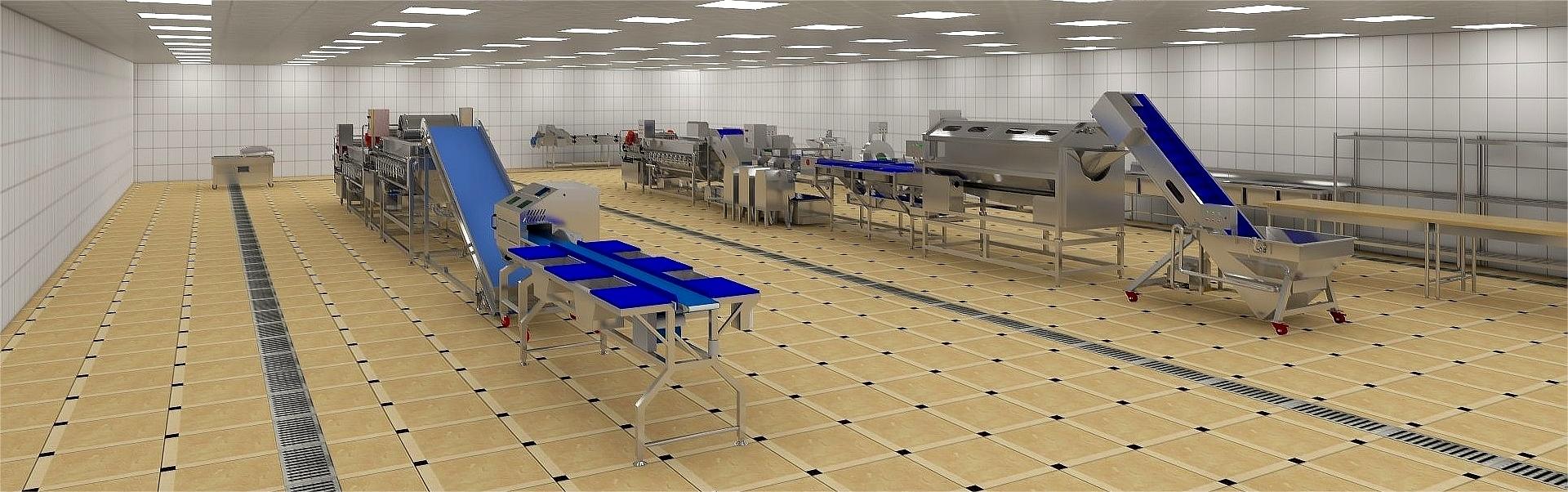
When it comes to grinding meat, both Meat Grinders and food processors can get the job done. However, they work in different ways and produce different meat textures. For home cooks, butcher shops, restaurants, and food processing businesses, choosing the right equipment depends on processing volume, desired meat consistency, and production requirements.
So, is there a big difference between using a Meat grinder and a food processor for grinding meat? The answer is yes. Understanding their differences can help buyers select the right equipment for their specific applications.
1. How Does a Meat grinder Work?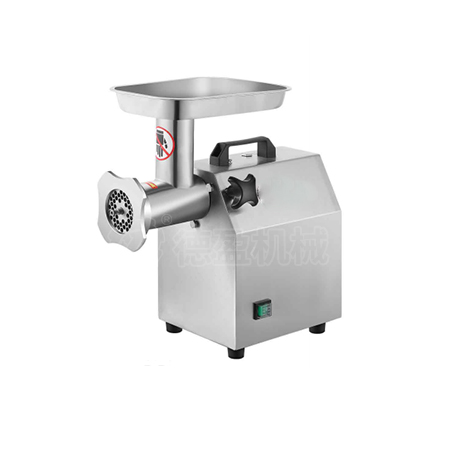
A Meat Grinder is a specialized machine designed to process meat into ground meat. It typically uses a feeding tube, rotating screw (auger), cutting blade, and grinding plate to process meat continuously.
As meat enters the feeding tube, the auger pushes it toward the cutting blade. The blade cuts the meat against the perforated grinding plate, producing ground meat with a relatively uniform particle size.
Meat grinders are available in manual, electric, commercial, and industrial models. Different grinding plates allow operators to adjust the coarseness of the final product.
2. Can a Food Processor Grind Meat?
Yes. A food processor can grind meat using its high-speed rotating blade. When small pieces of chilled meat are placed inside the bowl, the blade cuts them into smaller pieces through repeated chopping.
However, a food processor does not use the same extrusion and grinding mechanism as a meat grinder. Its blade chops meat rather than forcing it through a grinding plate.
This means the final texture can be less consistent, especially when processing larger batches or running the machine for too long. Overprocessing may also turn meat into a paste-like mixture.
3. Meat Grinder vs. Food Processor: Key Differences
| Comparison | Meat Grinder | Food Processor |
|---|---|---|
| Main Function | Grinding meat | Chopping, slicing, mixing, and processing food |
| Working Mechanism | Auger, blade, and grinding plate | High-speed rotating blade |
| Meat Texture | More uniform and consistent | Depends on processing time and technique |
| Processing Capacity | Suitable for continuous and larger-volume processing, depending on model | Generally better for small batches |
| Grinding Control | Different grinding plates provide particle-size options | Controlled mainly by chopping time |
| Versatility | Primarily designed for meat and related ingredients | Can process vegetables, fruits, nuts, and other foods |
| Commercial Applications | Butcher shops, restaurants, and meat processing facilities | Food preparation kitchens and small-scale food operations |
4. Advantages and Disadvantages of Using a Meat Grinder
Advantages
Consistent meat texture: The grinding plate helps produce relatively uniform meat particles.
Better for larger batches: Commercial and industrial models are designed to handle higher processing volumes.
Adjustable grinding results: Different plate sizes allow operators to choose coarse, medium, or fine grinding.
Designed for meat processing: Its dedicated grinding mechanism makes it suitable for regular meat grinding tasks.
Disadvantages
It is less versatile than a food processor.
Some models require additional accessories for different processing tasks.
Cleaning the feeding tube, auger, blade, and grinding plate requires proper disassembly and maintenance.
5. Advantages and Disadvantages of Using a Food Processor
Advantages
Multi-purpose functionality: It can chop vegetables, blend ingredients, make sauces, and process other foods.
Convenient for small batches: It works well for occasional meat preparation in small quantities.
Simple operation: Most models feature straightforward controls and compact designs.
Disadvantages
Less consistent texture: Meat may be unevenly chopped if the ingredients are not distributed properly.
Limited batch capacity: Processing large amounts may require multiple batches.
Risk of overprocessing: Excessive chopping can produce a sticky or paste-like texture.
Not designed for continuous meat grinding: Most standard food processors are not intended for heavy-duty meat processing.
6. Which Equipment Should You Choose for Grinding Meat?
The right choice depends on your processing requirements, production scale, and expected meat quality.
Choose a Meat Grinder If:
You regularly process ground beef, pork, chicken, or other meats.
You need more consistent meat particle sizes.
You operate a butcher shop, restaurant, or meat processing business.
You need equipment that can handle repeated or continuous grinding operations.
Choose a Food Processor If:
You only need to process small quantities of meat occasionally.
You also need to chop vegetables, nuts, and other ingredients.
You do not require precisely controlled ground meat textures.
Your food preparation tasks involve multiple ingredients and processing methods.
7. What Should Commercial Buyers Consider When Selecting Meat Grinding Equipment?
For commercial and industrial applications, equipment selection involves more than comparing the initial purchase price. Buyers should evaluate several important factors:
Processing Capacity
Check the machine's rated output, usually measured in kilograms per hour. Select a model that matches your expected production volume and allows room for future demand.
Grinding Plate Options
Different products require different meat particle sizes. Check whether the equipment supports interchangeable grinding plates and whether the available sizes meet your production requirements.
Material and Hygiene
Food-contact components should be made from suitable food-grade materials, such as stainless steel. Easy disassembly, smooth surfaces, and accessible cleaning areas are also important for maintaining food hygiene.
Motor Performance
Motor power, operating stability, and suitability for continuous workloads should be considered when selecting commercial meat grinding equipment.
Maintenance and After-Sales Support
Check the availability of replacement blades, grinding plates, and other wear parts. Reliable technical support can help reduce equipment downtime and maintain production efficiency.
Conclusion
Although both machines can process meat, a meat grinder and a food processor are designed for different purposes. A food processor is a versatile kitchen appliance suitable for occasional small-batch chopping, while a meat grinder provides more controlled and consistent results for regular meat grinding.
For butcher shops, restaurants, and commercial meat processing operations, a dedicated meat grinder is generally the more practical choice. Evaluating processing capacity, grinding options, hygiene, and maintenance requirements will help buyers select equipment that supports their production needs.