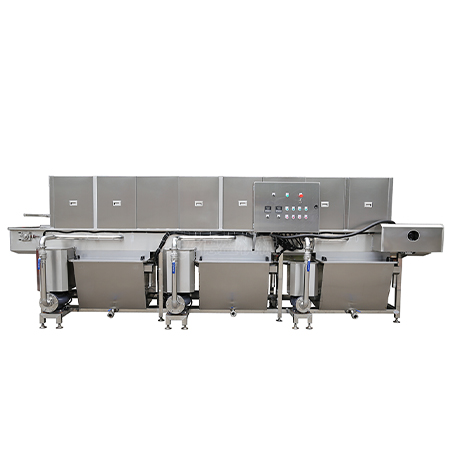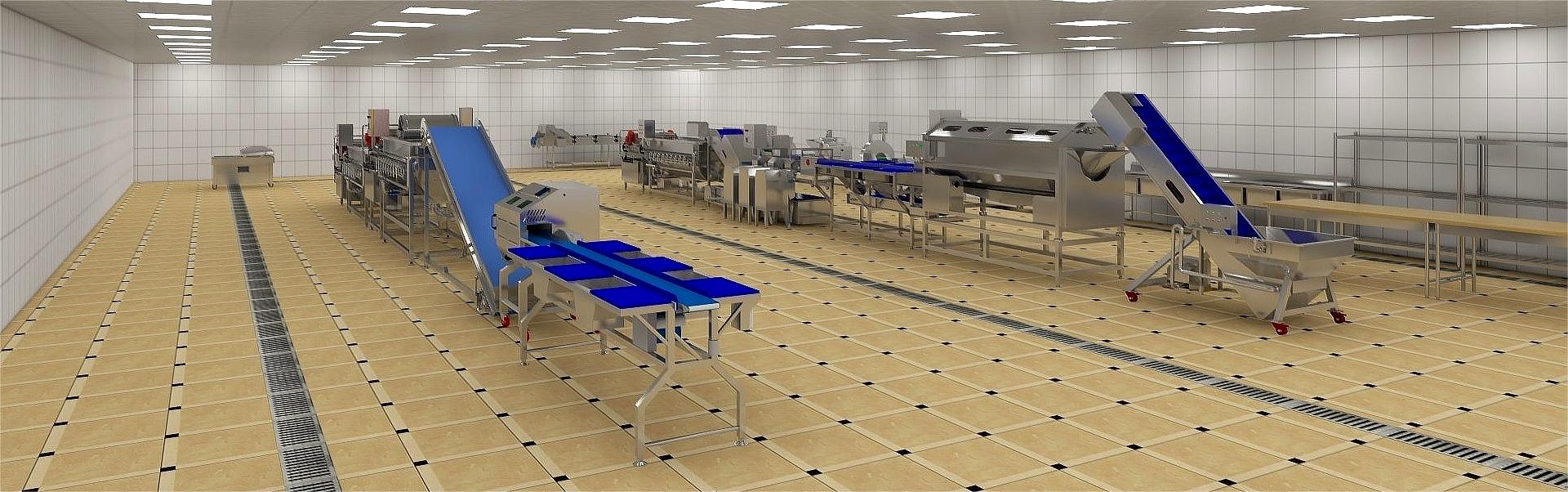
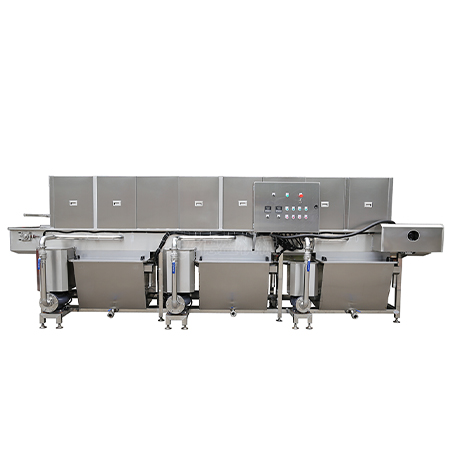






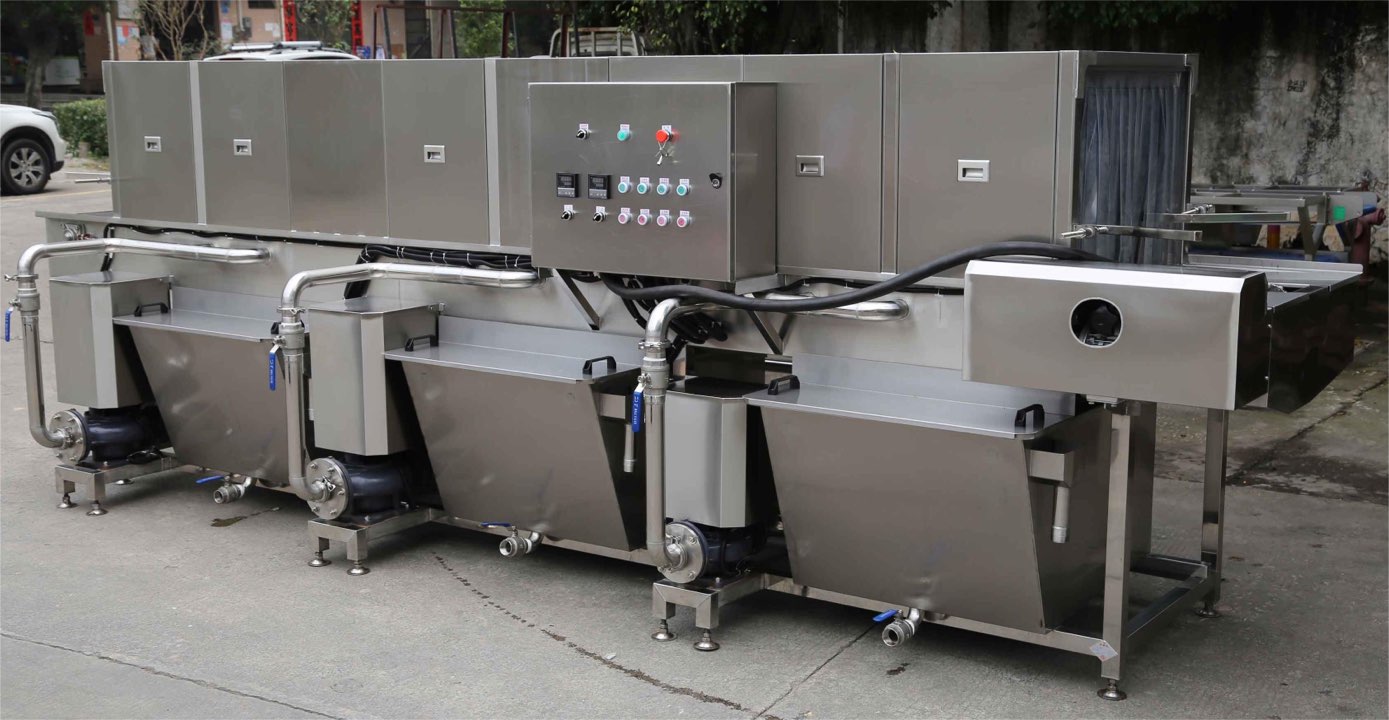
Crate Washing Machine Manufacturers refers to equipment manufacturers that specialize in the production of crate washing machines. This type of equipment is widely used in food processing, dairy, pharmaceutical, logistics and other industries. It is specially used to clean various plastic crates, turnover baskets, pallets, etc. to ensure the cleanliness and hygiene of containers during recycling. Manufacturers are responsible for design, research and development, production and after-sales service to ensure stable equipment performance, excellent cleaning effect, and meet the cleaning needs in different scenarios.
| Technical Parameters | |
| Overall dimensions | 6000×1270×1620mm |
| Voltage | 380V |
| Power | 9.75kW (without heating) |
| Output | 800-2000 pieces/h |
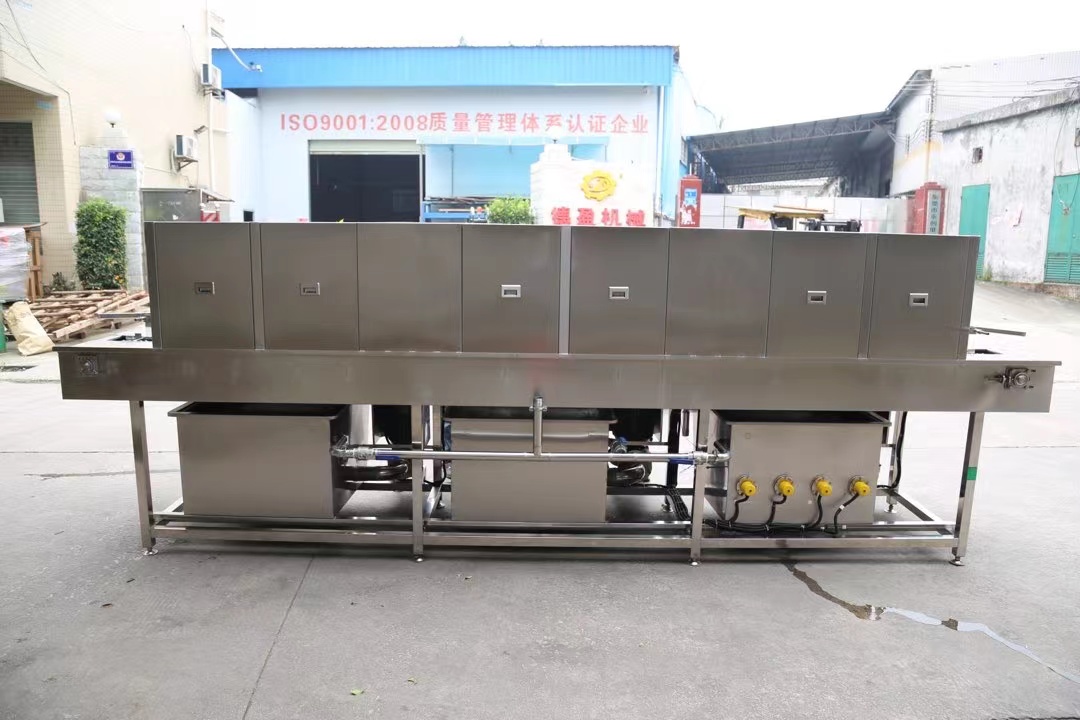
Usage process:
1. No load test machine: Connect the power supply to conduct a complete machine no-load test, check whether the control and operation of each part are normal. When the vehicle is running empty, there should be no impact vibration or abnormal sound. Otherwise, the machine should be stopped for inspection, and subsequent operations can only be carried out after the fault is eliminated. It is recommended to start the device and run it idle for 3-5 minutes, listening to whether the sound of the water pump and motor running is smooth, without sharp friction or jamming. After confirming that everything is normal, connect the water source and align the drainage with the sewage outlet of the floor drain before officially testing the machine.
2. Uniform feeding: Place the pre processed material basket smoothly into the conveyor track of the basket washing machine, aligning the material basket with the track to avoid tilting or misalignment. The material baskets should maintain appropriate spacing and should not be stacked or excessively squeezed. It is usually recommended to place them in a single layer and not exceed the edge of the track. The conveying speed is adjustable and controlled by a variable frequency motor. The conveyor belt speed can be adjusted according to the degree of dirt in the material basket. The conveyor belt is equipped with a fixing device to ensure smooth and uniform feeding.
3. Automatic discharge: The cleaned material basket is driven by a conveyor chain and continuously and smoothly discharged from the discharge end. The material basket is directly transported to the end by the conveyor belt, and the operator manually removes it at the exit or connects it directly to the conveyor belt to enter the next step. The equipment adopts a continuous tunnel operation, with synchronous operation of dirty basket loading and cleaning discharge, eliminating the need for manual basket brushing. The discharge speed is adjustable, making it easy to coordinate with the manual basket picking rhythm, and a single person can complete the entire line operation.
Equipment features:
High pressure cleaning: The main cleaning method is high-pressure spray flushing, which uses a high-pressure water pump to draw water at high speed into the spray pipe, and sprays it out through the nozzle to form a high-pressure water flow. The machine is equipped with high-pressure sprinklers on all four sides, including the upper, lower, left, and right sides. The direction of the spray nozzle can be adjusted, and there are no blind spots for cleaning. The pressure is generally between 0.3-0.8MPa, and each circulating water tank uses stainless steel centrifugal water pumps for circulating spraying, combined with solvents or 60-80 ℃ high-temperature hot water, effectively removing oil stains and stubborn stains.
Distribution of detergents and disinfectants: Multiple sets of spray pipes are installed in the cleaning section, and detergents and disinfectants can be added as needed. The addition method is flexible, and an electronic metering pump can be selected for automatic quantitative distribution, or the concentration can be manually adjusted and added dropwise. Each spray section is equipped with an independent circulating filtered water tank, which uses cleaning agents at room temperature. Standard without heating treatment. If you need to improve the cleaning or disinfection effect, you can customize a heating module and automatic distribution system to meet different cleaning requirements.
Multi cleaning room design: The cleaning channel is divided into multiple independent rooms such as pre washing, main washing, rinsing, disinfection, etc. Each room is equipped with room temperature circulating water and does not have a heating device. Each room is equipped with an independent filtered water tank and circulating water pump to achieve segmented processing. Both sides are equipped with movable waterproof doors, and both ends are sealed with soft door curtains for waterproofing. Each section can be flexibly combined, with no heating as standard, but additional heating chambers can be customized according to needs to achieve free switching between hot and cold cleaning.
Feature:
Material: The whole machine is made of high-quality 304 stainless steel, which meets food safety and hygiene standards. The body skeleton, shell, water tank, spray pipe, and conveyor chain plate are all made of 304 stainless steel material, which is corrosion-resistant, easy to clean, and rust free. The nozzle is made of high-temperature resistant engineering plastic, and all connectors and fasteners are made of stainless steel anti rust material, ensuring stable operation of the equipment in humid environments for a long time and extending its service life.
Advanced cleaning technology: The turnover basket cleaning machine adopts a cleaning process that combines multi-stage high-pressure spraying and circulating filtration. Each cleaning section independently circulates water, saving energy. The sprinkler system is designed with precision fluid mechanics to ensure that the water pressure forms a fully covered fan-shaped water curtain within the range of 0.3-0.8 MPa, without any cleaning dead corners. Equipped with an automatic water replenishment and filtration system to maintain clean water quality. The automatic quantitative distribution technology of detergent accurately controls the dosage, and optional disinfection and sterilization system is available. If heating is required, a heating tube can be installed to achieve hot water cleaning, further improving the cleaning effect.
Diverse specifications: Multiple specifications can be provided according to different basket sizes and production needs. The conveying width, length, and height can be customized according to the actual basket size of the customer. The common width of the basket is 300-800mm, and the height is 100-400mm. Special sizes can be customized non-standard. The equipment processing capacity ranges from tens to hundreds of baskets per hour, meeting the differentiated needs of small and medium-sized enterprises as well as large factories. The number of cleaning sections can be increased or decreased in combination, with flexible configuration to meet different cleanliness requirements.
Safety certification: The equipment has passed CE certification, ISO9001 quality management system, patents and other certifications, and is popular in Europe, Europe, America, Asia, Southeast Asia and other countries.
Universality and durability
Processing structure (core): The cleaning room is welded with a fully stainless steel frame, which is sturdy and stable in structure, and will not deform after long-term use. The inner liner is fully welded and designed with no dead corners to avoid dirt and grime accumulation, meeting hygiene standards. The layout of the spray pipeline is reasonable, and the quick detachable nozzle is easy to clean and replace. The water tank is equipped with multiple layers of filtration devices, and the circulating water is reused after being treated with slag separation. The whole machine adopts a tilted drainage structure, which completely eliminates water accumulation and effectively prevents bacterial growth, making it easy for daily maintenance and upkeep.
Transmission and feeding/discharging mechanism: A reduction motor is used to drive the sprocket chain, which drives the conveyor belt to achieve uniform motion of the basket, and variable frequency speed regulation is used to adapt to different production requirements. A guiding mechanism is installed at the feeding end to ensure that the basket accurately enters the cleaning channel. The conveyor belt at the discharge end extends directly to transport the washing basket to the outlet, where it is manually collected. The feeding/discharging process is a continuous operation, which runs stably and reliably. The start stop and speed adjustment of the equipment are manually operated by the electrical control cabinet.
Modular design: The whole machine adopts a modular combination design, and each cleaning section (pre washing, main washing, rinsing, disinfection) is independent of each other, which can be flexibly combined or expanded according to customer process requirements. Each module comes with its own water tank, water pump, and electrical control interface, making it easy to assemble and add or remove functions in the future. The conveying system is driven in sections, and the speed of each section can be independently adjusted. This design not only shortens the production cycle, but also facilitates equipment renovation, upgrading, and localized maintenance.
Simplify the operational process
Before starting up, check the power and water sources, and conduct a no-load test run for 3-5 minutes to confirm that there are no abnormalities; Manually adjust the frequency converter to set the conveying speed, and place the material basket neatly into the feeding port for continuous and uniform feeding; Start the high-pressure spray pump, and each cleaning section will automatically spray at room temperature. The detergent will be manually dripped or automatically distributed as needed; The washing material basket is transported by a conveyor belt to the discharge port for manual removal or received by a turnover vehicle; When stopping the machine, stop feeding first. After all material baskets are cleared, turn off the spray pump and power supply. Drain the water tank and clean the filter screen daily.
Suitable for various processing industries
Food processing industry: suitable for slaughter, meat, seafood, vegetables, beverages, brewing and other food processing plants, used for cleaning various turnover baskets, material trays, pallets and other containers. It can remove oil stains, meat scraps, fruit and vegetable residues attached to the surface of the basket, ensuring the hygiene and safety of food contact containers.
Logistics and warehousing industry: suitable for logistics centers and distribution centers, used for cleaning plastic baskets, pallets, storage cages and other containers frequently used in warehousing and logistics. It can efficiently remove dust and debris accumulated during transportation and storage, solving the problems of low manual cleaning efficiency and many dead corners.
Chemical industry: suitable for chemical raw material production and processing enterprises, used for cleaning, storing, and transporting packaging baskets and turnover containers for chemical raw materials, finished products, etc. Effectively remove residual chemical materials and stains on the surface of containers, avoid cross contamination between different batches of products, and ensure product quality and production safety.
Installation and Debugging
Equipment installation requires selecting a flat and sturdy concrete floor, and reserving drainage ditches and water and electricity interfaces according to the requirements of the foundation drawing. After the main engine is hoisted in place, adjust the anchor bolts to ensure that the machine body is horizontal and the joints of each section are aligned and sealed. Connect the inlet pipe, drainage pipe, and power cord. The drainage pipe should have sufficient slope to ensure smooth drainage. The power supply must meet the rated voltage and power requirements of the equipment, and be reliably grounded. Check if all fasteners are loose, and add an appropriate amount of lubricating oil to each lubrication point.
Connect the power source and fill each water tank with clean water to the specified level. Start each water pump motor with no load first, check if the direction of rotation is correct, if the spraying is normal, and if the direction and speed of the conveyor belt can be adjusted. After confirming that there are no abnormalities, put several dirty baskets into the feeding port for trial operation, observe the cleaning effect and whether the connection between each section is smooth. Adjust the spray pressure, conveying speed, and detergent dosage according to the cleaning effect until the cleaning meets the standard, and then put it into normal production.
Frequently Asked Questions
How to solve the problem of insufficient spray pressure in vegetable basket cleaning machine?
The main reason is that the water pump inlet is blocked, the nozzle is blocked, or the water tank level is too low. Firstly, clean the inlet filter screen, remove the clogged nozzle and use compressed air or clean water to clear it. Add water to the specified level and check if the water pump is reversing or missing phase.
How to solve the problem of stains on the material basket cleaning machine after cleaning?
The main reasons are too fast conveying speed, too low spray pressure, or insufficient detergent concentration. Firstly, reduce the frequency conversion speed, increase the spray pressure, and appropriately increase the amount of detergent added.
Maintenance method:
Daily maintenance: After daily work, drain the accumulated water in each water tank, remove the filter screen to remove debris, rinse with clean water, and reset. Wipe the exterior of the machine and the spray pipe to remove any residual dirt on the surface of the conveyor belt. Check if the nozzle is blocked and promptly clear any blockages found. Turn off the power source and open the drain valve to completely drain the water stored in the pipeline. Check if all fasteners are loose and if the tension of the conveyor belt is appropriate. Only after confirming that it is normal can you leave the post.
Regular maintenance: Check the lubrication of the water pump and motor bearings every two weeks, and add an appropriate amount of lubricating oil. Clean the scale and sediment inside the water tank every month, check the wear of the spray pipe, and replace the aging sealing ring. Check the oil level of the gearbox every quarter, and add or replace gear oil if it is insufficient; Check the insulation performance and grounding reliability of electrical circuits. Annual comprehensive maintenance of all transmission components, replacement of severely worn chains, sprockets, and bearings to ensure long-term stable operation of the equipment.
Safety Reminder
Do not open the cover or reach inside the machine during operation.
If there is a blockage in the biological material basket, power off first and then deal with it.
Why Choose Deying Machinery?
-Factory-Direct: Integrated manufacturing & trading for efficient, direct communication.
-Custom Solutions: Tailored processing equipment to meet your specific production needs.
-Global Network: Supported by worldwide distributors for seamless after-sales service.
-Learn more about us:https://www.dyfoodmachines.com/about-us
| Technical Parameters | |
| Overall dimensions | 6000×1270×1620mm |
| Voltage | 380V |
| Power | 9.75kW (without heating) |
| Output | 800-2000 pieces/h |

Dongguan De Ying food machinery Co., LTD


Copyright © 2026 Dongguan Deying Food Machinery Co., Ltd All rights reserved.


 PDF
PDF